The Rise of Fake War Imagery: Analyzing the Viral Gulf Explosion Video
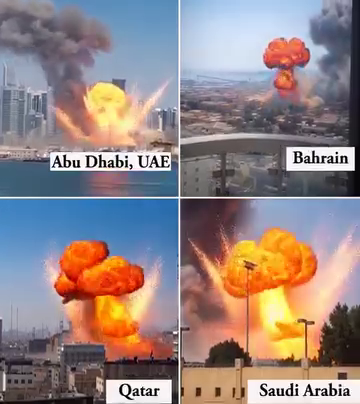
In the era of digital information, social media platforms have become the primary battleground for narrative control during global conflicts. A striking example of this trend is a viral multi-screen video showcasing massive explosions across major Gulf states. The brief video clip splits into four distinct quadrants, each purporting to depict a devastating blast. According to the on-screen captions, these catastrophic events simultaneously struck Abu Dhabi in the United Arab Emirates, Bahrain, Qatar, and Saudi Arabia. Each quadrant presents a terrifying visual of a massive fireball escalating into a dense, dark mushroom cloud over urban landscapes.
To the untrained eye, the footage looks like genuine breaking news documenting an unprecedented coordinated military strike in the Middle East. The dramatic backdrop of modern skylines and coastal areas adds an intense layer of realism to the presentation. Millions of internet users have watched and shared this specific montage across various digital networks. Many viewers immediately assumed the video recorded actual consequences of the geopolitical tensions that erupted in early 2026. The sudden circulation of the clip sparked widespread panic and intense speculation among international observers.
Unmasking the Digital Illusion: Evidence of Artificial Intelligence
Despite its highly convincing nature, comprehensive investigations by global fact-checking organizations have debunked the footage entirely. Security experts and digital forensic analysts subjected the multi-screen video to advanced verification tools. Deep learning detection software consistently flagged the visuals as highly sophisticated products of generative artificial intelligence. A closer look at the individual frames reveals several classic anomalies inherent to AI-generated video models. In the quadrant representing Bahrain, moving vehicles on the roadway appear to unnaturally merge into one another.
Pedestrians captured in the background distort seamlessly or vanish abruptly from the scene altogether. The architectural geometry of the buildings in the Abu Dhabi section undergoes subtle morphing as the smoke billows. These visual glitches are distinct signatures of modern text-to-video AI generators rather than real-world physics. Furthermore, reputable international news agencies reported no such synchronized explosions in these specific locations at the time of the post. The absence of official government confirmations or civilian live streams further solidified the conclusion that the video is fake.
The Real Geopolitical Context Behind the Viral Propaganda
This synthetic video did not emerge in a vacuum but was deliberately designed to exploit existing regional anxieties. Real military frictions did take place in the broader Middle East region following hostilities involving international alliances in 2026. Actual events included drone interceptions and localized industrial incidents that kept the Gulf region on high alert. For instance, a technical accident at a major gas processing hub in Qatar caused a real explosion during this period. Bad actors frequently seize upon such genuine news headlines to manufacture hyper-sensationalized visual content.
By combining real geopolitical fears with highly cinematic AI imagery, fabricators easily manipulate public perception on a massive scale. The viral video aims to exaggerate the scale of destruction to create a false sense of total regional collapse. Such digital misdirection complicates the work of diplomats, journalists, and defense analysts trying to assess real conditions. The strategy of using AI to simulate wartime destruction represents a dangerous evolution in modern psychological warfare. Consequently, audiences must learn to differentiate between verified documentation and digitally synthesized propaganda.
The Threat of AI-Generated Misinformation in Global Crises
The proliferation of hyper-realistic synthetic media poses a severe threat to global information integrity. Today, advanced generative models allow almost anyone to create terrifying war footage with just a few text prompts. The democratization of these powerful tools has outpaced the general public’s ability to verify what they see. When high-fidelity fake videos go viral, they can trigger immediate economic consequences, such as oil price fluctuations. Emotional reactions to synthetic images often override critical thinking, driving rapid sharing across messaging apps.
Major social media platforms face an uphill battle in detecting and labeling these AI fabrications before they spread widely. Digital watermarks and metadata logging are being developed to trace the origins of synthesized video clips. However, deceptive creators continuously find clever workarounds to strip identifying data from their multimedia files. The viral Middle East explosion montage serves as a textbook case study for media literacy programs worldwide. It highlights why visual evidence can no longer be accepted at face value without verified journalistic provenance.
Best Practices for Verifying Breaking News Videos Online
Protecting oneself from digital deception requires a proactive approach to consuming online news media. When encountering a shocking video of an explosion, viewers should immediately cross-reference the claim with established news outlets. Performing a reverse image search on specific video keyframes can quickly reveal if the imagery is synthetic or recycled. Look closely at fine details such as human limbs, text rendering, and the behavior of smoke or fire for inconsistencies. Real video footage rarely exhibits the dreamlike morphing effects seen in current generative AI outputs.
Checking the source account’s credibility and verification status can also prevent the spread of unverified rumors. Official statements from local authorities or embassies provide the safest confirmation during suspected military crises. Sharing unverified media during a volatile geopolitical situation only feeds the machinery of international disinformation. Ultimately, the viral Gulf explosion video stands as a stark reminder of the power and peril of artificial intelligence. Developing a skeptical mindset toward sensational online content remains our best defense in an increasingly simulated digital world.