Chilling Viral Video Captures Overcrowded Ferry Tilting and People Swimming in Choppy Open Waters
A gripping video showcasing a major maritime crisis has surfaced online, capturing the terrifying moments an extremely overcrowded boat begins to lean dangerously to one side in the middle of a rough sea. The footage, which has rapidly gathered attention across social media platforms, highlights the immense dangers associated with overloaded watercraft and human migration crises. As viewers express deep shock and concern over the fate of the individuals shown, the video has sparked an urgent global conversation regarding maritime safety protocols, rescue operations, and international border security.
A Scene of Absolute Chaos on the Open Sea
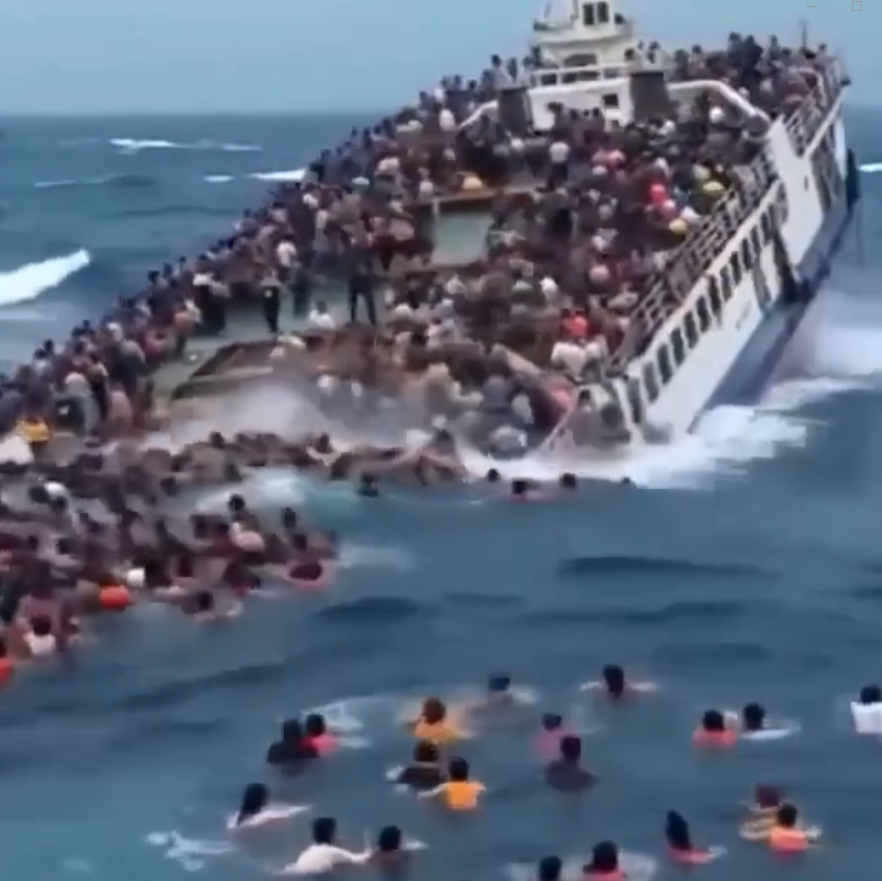
The harrowing clip opens with a large, multi-level passenger ferry or transit vessel struggling to maintain its stability amidst swelling ocean waves. The most striking and alarming aspect of the footage is the unbelievable number of people tightly packed onto every available square inch of the boat’s exposed decks. Hundreds of passengers are seen clinging to the upper railings, staircases, and roof of the ship’s superstructure, creating a severe top-heavy imbalance that places the entire vessel in immediate jeopardy.
As the rough waves continually buffet the hull, the boat suffers a dramatic and severe list to its starboard side, leaning at a critical angle toward the churning water. This dangerous tilt creates a wave of panic on board as the lower deck is nearly submerged by the incoming sea spray. The sheer volume of human weight combined with the turbulent ocean forces a chaotic scenario where remaining aboard seems just as perilous as being in the water itself.
Scores of Passengers Left Swimming in Rough Waters
In a deeply distressing visual, the camera shifts focus to reveal dozens of people already scattered across the open water surrounding the tilting ship. Men, women, and children are seen desperately treading water, trying to stay afloat in the deep blue ocean as large swells threaten to pull them under. The vast majority of the individuals swimming in the sea appear to be without any form of life jacket or flotation device, significantly increasing the risk of drowning.
The proximity of the swimming passengers to the listing vessel creates an incredibly hazardous environment, as a sudden capsizing could easily trap individuals beneath the massive hull. Some swimmers try to maintain a safe distance from the boat, while others attempt to swim back toward the structure in a desperate bid to find something to hold onto. The sound of rushing waves and distant shouting adds a layer of intense auditory panic to the already horrific scene, emphasizing the isolation and danger of a deep-sea emergency.
The Growing Crisis of Overloaded Maritime Travel
While the exact location and background context of this specific incident remain unconfirmed, security and maritime experts note that such visuals are tragically common in zones characterized by mass migration or under-regulated commercial transport. In many parts of the world, poorly maintained vessels are routinely overloaded far beyond their legal carrying capacities by smugglers or unmonitored local operators. These dangerous practices ignore basic weight distribution laws, leaving ships completely vulnerable to capsizing at the first sign of bad weather.
Human rights organizations have repeatedly warned about the escalating fatalities associated with risky sea crossings, calling for more robust international search-and-rescue operations along high-traffic maritime routes. When an emergency occurs far from the coastline, the response time of emergency services can mean the difference between life and death for hundreds of people. This viral video serves as a sobering and undeniable reminder of the urgent need for stricter enforcement of maritime laws and international cooperation to prevent future tragedies on the world’s oceans.
Follow-up Question: Would you like me to focus more on the standard emergency protocols for capsizing vessels or analyze the legal responsibilities of international maritime rescue teams?